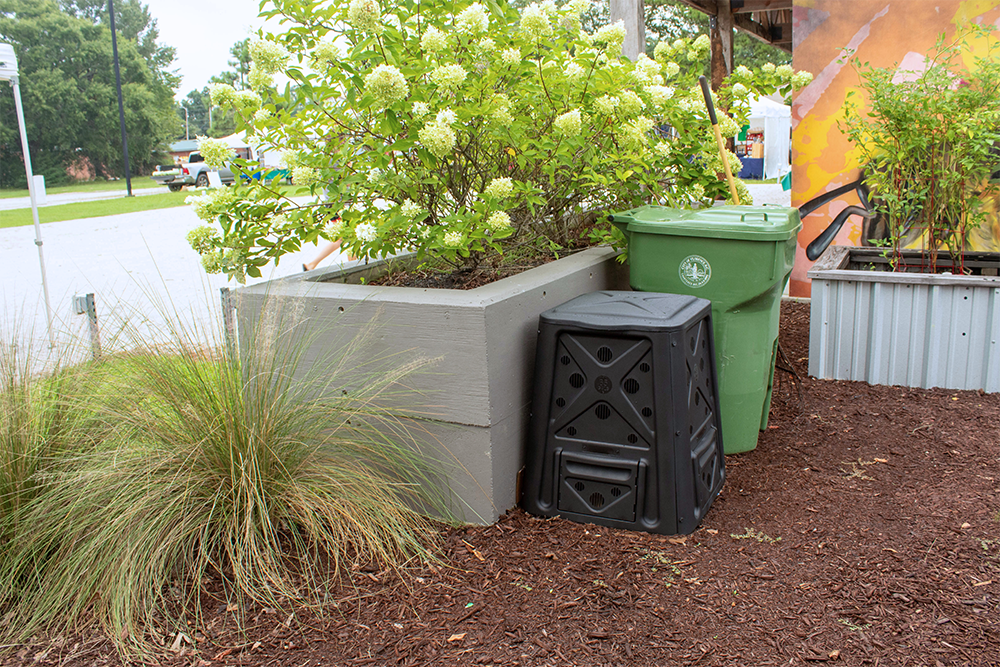
The City Center Market proudly features a 65-gallon compost bin crafted entirely from recycled materials, fueling their cultural garden beds with sustainability and innovation.
This bin highlights their ongoing mission to showcase the exciting possibilities of urban gardening while enhancing the thriving success of their garden beds.
The goal of this program is not only to educate the community but also to promote the transformation of urban spaces into flourishing green havens.
What is composting?
Composting is the process of breaking down organic materials, such as leaves, grass clippings, and food waste from your home or landscape into a nutrient-rich product that can be used in your garden.
Composting is a naturally occurring process but can be accelerated and improved upon certain conditions.
What are the benefits of composting?
Adding compost to your garden benefits all soil types. It helps sandy soils retain water and nutrients, improves drainage and aeration in clay soils, and reduces crusting that leads to water runoff. Compost also introduces beneficial organisms that enhance soil health and nutrient availability, making it essential for cultivating healthy plants. Additionally, composting helps reduce the amount of waste sent to landfills.
What can you compost?
A general guideline when composting is to add two parts "green" to one part "brown." The smaller the material, the faster it decomposes.
Nitrogen-rich "Greens"
Fresh yard waste
Fruit and vegetable scraps
Eggshells
Coffee grounds and tea bags
Carbon-rich "Browns"
Dried leaves
Straw and hay
Wood chips
Paper products
What can you NOT compost?
Pesticide-treated plants or clippings
Invasive weeds or weeds with seeds
Diseased or pest-infested plants
Meat, fish, cheese or dairy
Fats, oils or grease
Cat or dog feces; kitty litter
In addition to drawing pests or resulting in unwanted smells, these items may result in pathogens that could be a health hazard.
How to Get Started at Home:
Step 1: Select a location for your compost bin
Choosing the optimal location for your compost bin is crucial. It requires sufficient sunlight and air circulation to function effectively. Select a spot that gets at least three to four hours of direct sunlight daily and ensures unrestricted airflow on at least two sides of the bin. If situating near a fence or in a corner, maintain a 2-foot distance to promote proper air circulation and facilitate easy access for maintenance.
Step 2: Collect your materials and assemble your compost bin
When choosing a compost bin, you have various options available. These bins can be purchased from local stores or online retailers, offering different designs to suit your garden size and space requirements. It's crucial to ensure your chosen bin promotes adequate airflow, with slots or openings on all sides for oxygen circulation. Alternatively, you can create your own compost bin using repurposed wood or pallets. A bin sized around 1 cubic yard (3’x3’x3’) is ideal for maintaining optimal temperatures to facilitate microbial activity and decomposition. Ensure your DIY bin includes accessible points on all sides for easy maintenance, mixing, and compost harvesting.
Step 3: Add organic matter to your bin
Once your compost bin is ready, it's time to initiate the decomposition process by adding organic matter. During seasonal garden upkeep, gather debris such as branches, dried leaves, and lawn clippings, which can be directly added to the compost bin and will gradually decompose. Kitchen scraps like vegetables, fruits, and cleaned eggshells are also suitable additions, while it's best to avoid meats, dairy, and quickly spoiling items that may attract pests. To maintain a healthy compost pile, aim for a 2:1 ratio of carbon-rich brown materials (such as finely chopped branches and leaves) to nitrogen-rich green materials (like kitchen scraps and fresh clippings). Layering these materials ensures proper airflow and oxygenation within the bin.
Step 4: Water your compost bin
A compost bin needs moisture to start and sustain a thriving community of microbes, essential for decomposition. It's important to water your new compost bin weekly and check regularly to maintain adequate moisture, especially during the summer months.
Step 5: Turn your compost once a month
Turning or mixing your compost monthly will ensure sufficient aeration in your compost bin and accelerate the decomposition process.
Step 6: Let nature take its course
Establishing a productive compost bin system that consistently yields nutritious compost year-round requires patience. It typically takes about four to six months for the initial compost materials to start decomposing and foster essential microbial activity. Within eight to 12 months, you can begin harvesting compost to enrich your garden beds. Don't delay—start your new compost bin today to reap these benefits sooner!
Step 7: Harvest your fresh, homemade compost from your bin
Congratulations on reaching this point in your backyard composting journey! You've achieved a significant milestone. By becoming more sustainable, you've drastically reduced your carbon footprint by diverting waste from landfills. Now, you have access to fresh, nutrient-rich compost at no cost to enhance your vegetable and garden beds.
When you're ready to incorporate your new compost into the garden, simply open one of the access points on the bin and carefully rake or shovel out the bottom layer of compost. You'll notice the organic matter has decomposed into a dark, fertile soil that you can collect and apply to your gardens. After removing this material, give the remaining compost in the bin a quick mix and ensure it's well-watered. Let the compost bin continue its work.
Step 8: Apply your fresh compost to your garden beds
As you care for your vegetables and gardens, spread a layer of compost around the base of each plant and lightly blend it into the top 1-2 inches of the soil. For container gardens, incorporate compost into the soil around new plantings at the root level. You'll soon witness how this soil amendment revitalizes your plants, encouraging vigorous growth and impressive yields in just a few weeks.